


We use cookies to deliver the best possible experience on our website. By continuing to use this site, or closing this box, you consent to our use of cookies.
Soap Dispensers
Filters
Sort by
- الصفحة 1 من 1 (2 مجموع)
Soap Dispensers for Organised and Convenient Handwashing
Soap dispensers are an essential part of a functional handwashing area. They provide access to liquid soap near the washbasin, help organise everyday washing routines and allow facilities to manage soap replenishment through a regular maintenance schedule.
Jaquar offers wall-mounted soap dispensers in both push-button and automatic configurations. The listed range includes a push-button dispenser with a 0.8-litre capacity and an automatic dispenser with a 0.8-litre capacity. Their materials, finishes, operating methods and compatibility requirements differ, so each product should be assessed against the intended application.
A suitable dispenser should be convenient to operate, compatible with the intended soap, straightforward to refill and easy for staff to clean. Its position should allow users to access soap comfortably without obstructing the washbasin or other fittings.
Soap dispensers can be used in residential bathrooms and in shared environments such as offices, hospitality venues, restaurants, retail facilities and other washrooms. The product and installation method should be selected according to the expected usage, maintenance arrangements and requirements of the facility.
For a coordinated handwashing setup, explore Hand Dryers and Paper Towel Dispensers alongside soap dispensing solutions.
What Is a Soap Dispenser?
A soap dispenser stores liquid soap and releases it in a controlled amount when operated. Depending on the design, dispensing may be activated by pressing a button or by placing a hand within the detection area of an automatic sensor.
Wall-mounted soap dispensers are installed on a suitable wall near the washbasin. This arrangement can help preserve countertop space and provide a designated place for handwashing soap.
The choice of dispenser depends on several factors, including the operating mechanism, reservoir capacity, construction material, finish, refill method and type of soap being used. Compatibility is particularly important because not every dispenser is designed for every soap formulation.
Jaquar's listed wall-mounted range includes both push-button and automatic products, allowing facilities to compare different operating approaches.
Types of Jaquar Soap Dispensers
Push-Button Soap Dispenser
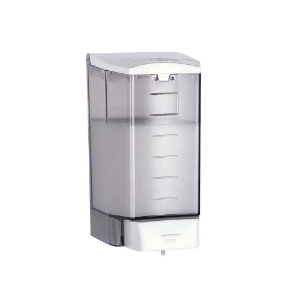
A push-button dispenser releases soap when the user operates its button. The listed Jaquar model has a 0.8-litre capacity, an ABS body and a white and smoked finish.
The product specification identifies a standard lock and key, a SAN thermoplastic tank and a corrosion-resistant anti-drip valve. It is specified for chlorine-free hand soap with a neutral pH.
This type of dispenser can be considered where a manually operated dispensing method is appropriate. Before selecting it, confirm that the intended soap is compatible and that the wall provides a suitable mounting location.
Automatic Soap Dispenser
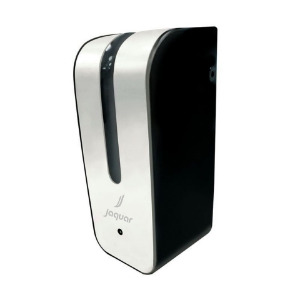
An automatic soap dispenser uses sensor-based operation to release soap without requiring the user to press a button. Jaquar's listed automatic model has a 0.8-litre capacity and a construction combining aluminium and ABS, with a chrome and black finish.
The product information identifies a front content viewer, a lock and special key, and an indicator that flashes when batteries need replacement. It is specified as suitable for neutral-pH, chlorine-free liquid hand soap and certain disinfectant solutions or hydroalcoholic gels, subject to the product's compatibility instructions.
Automatic operation can be useful in shared washrooms where touch-free dispensing is preferred. The facility should account for the model's power requirements, refill procedure and maintenance instructions when planning the installation.
Benefits of Wall-Mounted Soap Dispensers
Convenient Access to Soap
A dispenser positioned near the washbasin makes handwashing soap easy to locate. Users can dispense soap before rinsing their hands without searching for a separate bottle or moving away from the basin.
The dispenser should be installed at a comfortable and accessible height. Its position should also leave enough room for users to operate the tap and wash their hands naturally.
Better Organisation
Wall-mounted dispensers provide a designated location for soap and can reduce the number of loose containers on the countertop. This can help keep the washing area more organised and make cleaning around the basin easier.
The result depends on the overall layout and the placement of other fittings. Before installation, consider the mirror, tap, basin dimensions and any nearby accessories.
Choice of Operating Method
A push-button dispenser and an automatic dispenser serve the same general purpose but offer different user interactions.
A push-button model has a straightforward manual mechanism. An automatic model uses sensor detection and requires the appropriate power source and maintenance.
The decision should reflect the facility's operating preferences, user requirements and willingness to maintain the chosen system. Automatic operation should not be treated as a substitute for regular cleaning or correct handwashing practices.
Controlled Dispensing
Soap dispensers release soap through a designed dispensing mechanism. A properly maintained dispenser can provide a consistent method of accessing soap, although the amount released varies by product and configuration.
Avoid modifying the dispensing mechanism or filling the reservoir with a formulation that is not approved for the product. Follow the manufacturer's refill and cleaning instructions to support reliable operation.
Integration with Different Washroom Designs
A soap dispenser should complement the washbasin area without competing with other fittings. Its form, finish and mounting position can be considered alongside the tap, basin and other accessories.
Jaquar's listed products include different construction materials and finishes. Confirm the available finish and product specifications before selecting a dispenser for a particular design scheme.
How to Choose the Right Soap Dispenser
1. Decide Between Manual and Automatic Operation
The first decision is whether a push-button or sensor-operated dispenser best suits the washroom.
A push-button model may be appropriate where manual operation is preferred and a simple operating mechanism is desired. An automatic model may be suitable where touch-free dispensing is a priority.
Consider who will use the washroom, how frequently it is used and whether staff can maintain the selected product correctly.
2. Consider Reservoir Capacity
The listed Jaquar push-button and automatic models each have a capacity of 0.8 litres. Capacity affects how frequently the dispenser needs to be refilled, but actual refill intervals depend on usage and the amount dispensed each time.
Facilities with high visitor numbers may need to inspect soap levels more frequently. A content viewer, where provided, can help staff determine when replenishment is required.
3. Check Soap Compatibility
Soap compatibility is essential for proper operation. A product may be designed for a specific type of liquid soap or other approved formulation.
The listed push-button model is specified for neutral-pH, chlorine-free hand soap. The automatic model has additional stated compatibility for certain disinfectant solutions and hydroalcoholic gels. Always check the current product documentation before filling the dispenser.
Do not assume that a dispenser supports foaming soap, thick formulations or every type of sanitising product unless the manufacturer confirms compatibility.
4. Review the Construction and Finish
The listed push-button model uses ABS construction, while the automatic model combines aluminium and ABS. Their finishes also differ.
Choose a product based on the intended environment, maintenance requirements and surrounding fittings. Follow the recommended cleaning method for the actual material and finish to avoid surface damage.
5. Evaluate the Refill Method
The refill process should be convenient for the people responsible for maintenance. Review how the dispenser opens, how the reservoir is accessed and whether a key is required.
Staff should be familiar with the correct loading method and should close the dispenser securely after refilling. Incorrect loading can affect operation or cause leakage.
6. Consider Power and Battery Requirements
Manual dispensers do not use sensor-based automatic operation. Automatic dispensers may require batteries or another specified power arrangement.
For the listed automatic Jaquar model, the product information identifies a flashing indicator when batteries need replacement. Check the current technical documentation for the required battery type and servicing procedure before installation.
7. Plan the Mounting Position
A wall-mounted dispenser should be installed close to the washbasin, with sufficient space for users to operate it comfortably.
Confirm the wall's suitability, mounting dimensions and fixing requirements. Ensure that the installation does not obstruct the tap, mirror, basin or other accessories and that the unit can be accessed for refilling.
Soap Dispensers for Different Environments
Office Washrooms
Office washrooms need soap dispensers that are convenient for employees and visitors and manageable for cleaning teams. Consider the number of users, washbasin configuration and frequency of replenishment.
A wall-mounted unit can help keep the countertop organised. The maintenance routine should include checking soap levels, cleaning the exterior and confirming that the dispenser operates correctly.
Hotels and Hospitality Venues
In hospitality settings, the dispenser should complement the washroom's appearance and support a consistent handwashing arrangement.
Review the finish alongside the basin fittings and other accessories. The chosen product should also be practical to refill, secure where required and suitable for the anticipated usage.
Restaurants and Food-Service Facilities
Soap dispensers form part of the handwashing arrangement in food-service environments. Selection and installation should align with the facility's hygiene procedures and applicable requirements.
Check the compatibility of the soap, the ease of cleaning and the dispenser's placement relative to the washbasin. Staff should have a clear process for checking supplies and addressing dispensing problems.
Retail and Public Facilities
Public washrooms may experience fluctuating visitor volumes. The dispenser's capacity, refill process and maintenance requirements should be considered together.
For automatic dispensers, staff should understand the power requirements and the meaning of any indicator lights. For manual models, routine checks should confirm that the button and dispensing mechanism work correctly.
Residential Bathrooms
In a residential bathroom, a wall-mounted dispenser can help keep the washbasin area organised and reduce reliance on loose bottles.
Consider the number of users, preferred operating method, finish and available mounting space. Before drilling, verify the wall construction and the location of concealed plumbing or electrical services.
Installation Considerations
Correct installation helps make a soap dispenser convenient to use and easier to maintain.
Before installation:
- Confirm the exact dispenser model and its dimensions.
- Review the mounting instructions and fixing requirements.
- Check that the wall is suitable for the installation.
- Position the dispenser within comfortable reach of the washbasin.
- Ensure that the unit does not obstruct the tap, mirror or basin.
- Allow sufficient access to open the unit and refill the reservoir.
- Confirm the intended soap formulation is compatible.
- Check power or battery requirements for automatic models.
- Verify that staff can clean and inspect the dispenser easily.
For tiled walls, plan the fixing position carefully and check for concealed services before drilling. Use the specified mounting hardware and follow the manufacturer's installation instructions.
The dispenser should be secure and correctly aligned before it is filled and placed into service.
Soap Dispenser Cleaning and Maintenance
Regular cleaning and inspection help keep a dispenser presentable and support consistent operation.
Clean the Exterior
Use a soft cloth and a cleaning method suitable for the product's materials and finish. Avoid abrasive pads or unsuitable chemicals that could damage the surface.
Include the dispenser and the surrounding wall in the routine washroom cleaning schedule.
Check the Soap Supply
Inspect the reservoir or content viewer, where available, and refill the dispenser before it runs empty. Replenishment frequency depends on user volume and consumption.
Use only the soap or other formulation permitted by the product documentation. Do not mix incompatible products or add unapproved substances to the reservoir.
Inspect the Dispensing Mechanism
For a push-button dispenser, check that the button operates properly and that soap is released as intended. For an automatic model, keep the sensor area clean and follow the recommended operating checks.
If the dispenser leaks, fails to dispense or operates inconsistently, consult the product instructions and arrange inspection if the issue continues.
Check Locks and Closures
Where a lock and key are provided, ensure that the dispenser can be opened for replenishment and secured afterward. Do not force the lock or closure.
Maintain Automatic Models
For automatic dispensers, follow the specified battery replacement or power-maintenance procedure. If an indicator signals that batteries need replacement, address it according to the product instructions.
Persistent faults should be investigated by an appropriately qualified service professional where necessary.
Common Soap Dispenser Problems and Practical Checks
The Dispenser Does Not Release Soap
First, check whether the reservoir is empty and whether the soap is compatible with the product. For a manual model, inspect the operating mechanism according to the product instructions. For an automatic model, check the sensor area and power requirements.
If the problem persists after basic checks, consult the product documentation rather than dismantling the dispenser without guidance.
The Soap Appears to Be Too Thick
Some soap formulations may not be suitable for a particular dispenser. Check the manufacturer's compatibility requirements and use an approved formulation. Do not dilute soap or alter its composition unless the manufacturer specifically permits it.
The Dispenser Leaks
Check whether the reservoir is correctly seated and whether the dispenser has been filled and closed according to the instructions. Do not continue using a damaged unit if leakage persists. Arrange an inspection and replace damaged components as required.
The Automatic Dispenser Does Not Respond
Check that the sensor area is clean and that the product has the required power supply. If an indicator signals low batteries, follow the replacement procedure. If the dispenser still does not respond, refer to the product documentation or seek service assistance.
Frequently Asked Questions
1. What types of soap dispensers are available from Jaquar?
Jaquar lists wall-mounted push-button and automatic soap dispensers. The appropriate option depends on the preferred operating method, soap compatibility, installation conditions and maintenance requirements.
2. What is the capacity of Jaquar's listed soap dispensers?
The listed push-button and automatic models each have a capacity of 0.8 litres. Check the current product listing to confirm specifications before purchase.
3. What is the difference between a push-button and an automatic soap dispenser?
A push-button dispenser releases soap when its button is pressed. An automatic dispenser uses sensor detection to activate dispensing without requiring the user to press a button.
4. Are Jaquar soap dispensers wall-mounted?
Yes. The listed push-button and automatic models are designed for wall-mounted installation. Confirm the mounting requirements and available space before installation.
5. What soap can I use in a Jaquar soap dispenser?
Soap compatibility varies by model. The listed push-button dispenser is specified for neutral-pH, chlorine-free hand soap. The listed automatic model supports neutral-pH, chlorine-free liquid hand soap and certain other formulations described in its product documentation. Always verify compatibility before filling the unit.
6. Do Jaquar soap dispensers require regular refilling?
Yes. Refill frequency depends on reservoir capacity and usage. Check the soap level regularly and replenish the dispenser before it runs empty.
7. How do I clean a wall-mounted soap dispenser?
Clean the exterior with a soft cloth and a method suitable for the material and finish. Follow the manufacturer's instructions, avoid abrasive products and clean the surrounding wall and washbasin area as part of routine maintenance.
8. What should I consider when choosing an automatic soap dispenser?
Consider the reservoir capacity, sensor operation, soap compatibility, power or battery requirements, installation dimensions, finish and refill procedure. Ensure that the maintenance team can inspect and service the unit correctly.
9. Why might a soap dispenser stop working?
Possible causes include an empty reservoir, incompatible soap, an obstructed mechanism, a dirty sensor or a power issue in an automatic model. Follow the product instructions for basic checks and arrange service if the problem continues.
10. How do I choose the right soap dispenser for a commercial washroom?
Consider visitor volume, preferred operating method, reservoir capacity, consumable compatibility, refill frequency, installation space and maintenance arrangements. Compare the specifications of the shortlisted models and select the product that best meets the facility's operational needs.